
The Only Thing Inevitable Is Death and Change
Updated: Jun 19
Reflections on Transformation, Conviction and The Autobiography of Malcolm X
All that you touch
You Change.
All that you Change
Changes you.
The only lasting truth
Is Change.
God
Is Change.
– Octavia E. Butler,
Parable of the Sower
Butler's words are the truest entry point I've found into Malcolm X's life. Not the symbol, not the slogan, not the black-and-white photograph of a man peering through a curtain with a rifle in his hand, but the one who was hungry, ambitious, curious and willed by a force greater than himself.
The Malcolm X of modern memory is a flattened one. Most people can call up two or three things: by any means necessary, the Nation of Islam, a radical opposition to Martin Luther King Jr.'s vision of peaceful protest – a kind of reduction that happens to most historical figures. However, the depth of his wisdom remains today to serve anyone genuinely striving toward greatness, toward transformation, toward a life that means something. Malcolm's life, as told in his autobiography, is one of the most honest accounts of what it costs to keep evolving.
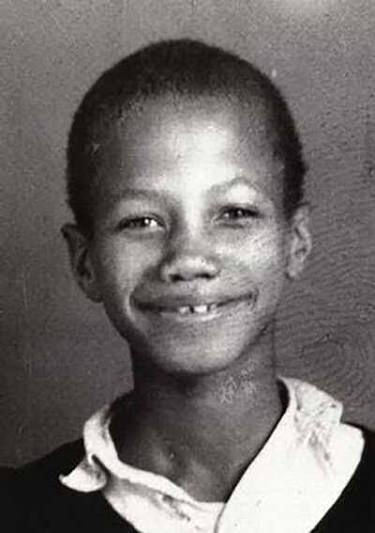
Born Malcolm Little in Omaha, Nebraska in 1925, the start of Malcolm's journey was far from an easy one. At just six years old, his father, a Black nationalist preacher, was murdered at the hands of who Malcolm believes was a white supremacist group, though there never was a full answer to his death. Under the weight of grief and poverty, Malcolm's mother deteriorated until the state took her away to a psychiatric facility, where she remained for most of his and his siblings' childhood. From there, a judge dispersed the children. Caught in the system America built to execute, Malcolm's early years began to write the story it wanted him to live.
Shaped by a cruel past, one ruled by a lack of control at the hands of white supremacy, Malcolm set out to create his own narrative. Caught up in a rough lifestyle in the streets of Boston and Harlem, Malcolm began running numbers, taking drugs, pimping, dealing and more just to survive. By twenty years old, he landed in prison where he was known as Detroit Red. He learned a lot there – how to read, write and speak at a high level, and eventually left as one of the most formidable minds of his generation. Prison also introduced him to the teachings of the Nation of Islam and Elijah Muhammad, the Nation's leader, and something clicked open in him. He read voraciously. He debated. He wrote letters. It was in prison that he became Malcolm X, dropping the last name he called a slave name and reclaiming ownership of himself, his lineage in the unknown of the X.
When released, Malcolm was finally able to meet his hero, and he became a leader within the Nation of Islam. Ascending to become the Nation's most powerful voice, he built temples, grew membership and said out loud what many Black Americans felt but had no platform for: that this country was sick, that integration on white terms was not liberation, that Black people deserved dignity of their own accord. He was feared by the government, beloved in the community and unwavering in his convictions.
That is, until the cracks began to show.
Elijah Muhammad – the man Malcolm had revered as a prophet, the man who had given him structure and purpose and a reason to live during a dark hour – turned out to be deeply, humanly flawed. From moral failures within the organization to jealousy over Malcolm's growing influence, and eventually a silencing and exile, the Nation of Islam became the source of Malcolm's greatest disillusionment. The organization that had once given Malcolm the boldness to change and platform to become the reputable figure we know today had turned their back on him.
And still, he chose to continue forward anyway.

In 1964, just a year before his assassination, Malcolm made Hajj. His pilgrimage to Mecca broke him again in a new way, in the best possible way. There, he stood shoulder to shoulder with Muslims of "all colors, from blue eyed blonds to black skin Africans" breaking bread, sharing space and calling each other brothers. He wrote home about it in equal parts shock and wonder. The racism he had known his whole life, he now understood, was not a global truth, but an American disease. He returned home as El-Hajj Malik El-Shabazz, with a more expansive vision of liberation – one rooted not in racial separatism but in human rights, Pan-Africanism and international solidarity that was, in many ways, more radical than anything he'd said before.
Upon his return, Malcolm's work broadened in scope under the weight of someone who had seen the world differently and couldn't unsee it. He knew he would die for it. He said so himself, and it was a knowing he'd carried with him from childhood – he would die behind his convictions, his gospel, much like his father. Writing his autobiography with Alex Haley was in part because he felt the end coming – he wanted his account on record, in his own words, before someone else attempted to write it. On February 21, 1965, members of the Nation of Islam shot him 21 times at the Audubon Ballroom in Harlem, in front of his wife and their daughters. He was 39.
The same organization that had once empowered him to dig deeper, to become a voice and vessel of transformation ultimately became his demise.
Again and again, he allowed himself to be transformed by new information,
new experiences and a deeper understanding of the world around him.
Malcolm's story left me with a strong sense of empowerment and energy, not just because of his legacy within African American history, but because as a human being, he refused to remain fixed. Again and again, he allowed himself to be transformed by new information, new experiences and a deeper understanding of the world around him. He remained curious and truth-seeking all the way through, and he wasn't afraid to prove his old self and old beliefs wrong in that search.
Everything he touched, he changed. And in turn, everything he changed also changed him. The defining truth across his lifetime was change.

Change has become a comforting thought. We're never too late, growth is always an option even if we've chosen the wrong path to start. We have the option to evolve beyond our failures. Malcolm's life proves this. His legacy reminds us that reinvention is always available; that no circumstance is final. A difficult childhood, a mistake, a detour or even an entire season of life does not have to determine where the story ends.
More than anything, The Autobiography of Malcolm X serves as a reminder to make the most of the time we have and to live with a mind open enough to be changed. Not because conviction is unimportant, but because expansion requires both humility and courage.
Malcolm's tragic ending is not what stuck with me most; he'd even warned us it was coming. What stays with me now is the constant sense of movement surrounding Malcolm's life – he never stopped changing. Each version of Malcolm – the street hustler, the minister, the separatist, the pilgrim – gave way to a larger, more empathetic and wiser one. He took in new information and let it move him, while remaining firm in his core conviction that Black people deserved to be free.
He didn't confuse rigidity with integrity. He understood that growth sometimes requires a departure from who you once were. Throughout the course of his short life, Malcolm experienced several cycles of death and rebirth, nearly the only certainty he could hold onto.
The only thing inevitable is death and change. Malcolm X lived like he knew that. And in the end, he died mid-becoming – as most of us tend to – honest, convicted and incomplete.
He died mid-becoming – as most of us tend to –
honest, convicted and incomplete.
—
If this essay resonated, you can support the work here.

Comments